
AR-15 Buffer Weights Guide: How to Custom-Tune H1, H2, and H3 Buffers
Key Takeaways / Summary:
- Selecting the right ar15 buffer weight balances gas energy, reduces felt recoil, and cures common cycling issues.
- Standard carbine buffers use steel weights, while heavy H1, H2, and H3 options swap in higher-density tungsten weights.
- Checking brass ejection angles helps pinpoint overgassed or undergassed rifles so you can install the correct buffer weights.
Fine-tuning an AR-15 build requires balancing gas pressure and mechanical resistance. JSE Surplus has specialized in AR-15 parts and custom build components since 2002. Finding the proper setup keeps your rifle reliable, comfortable to shoot, and running smoothly.
Understanding AR-15 Buffer Mechanics and Internal Mass Construction
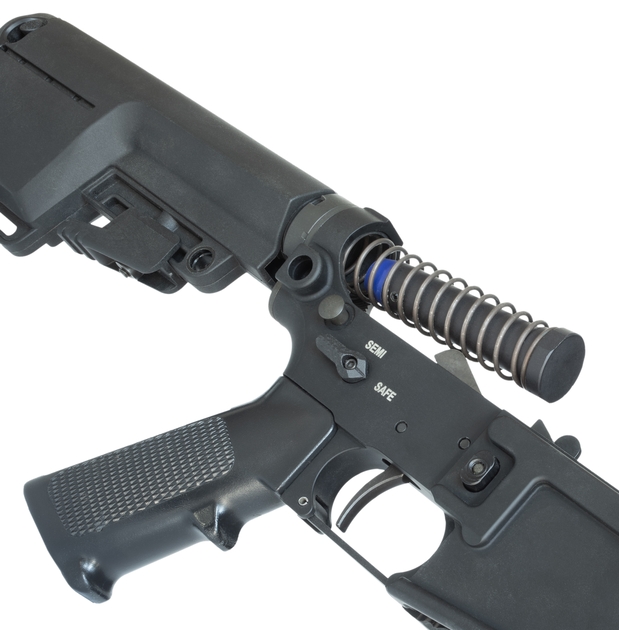
An AR-15 buffer sits inside the receiver extension behind the buffer spring. When a round fires, expanding gas drives the bolt carrier group rearward. The buffer absorbs that kinetic energy, slows the rearward movement, and then uses spring tension to push the bolt forward to strip a new cartridge into the chamber.
Inside a standard carbine buffer body, you will find internal weights separated by rubber spacers. These internal weights shift slightly during movement, acting as a dead-blow hammer. This dynamic movement prevents bolt bounce when the BCG slams shut.
Manufacturers adjust AR-15 buffer weights by swapping light steel weights for heavy tungsten ones. Controlling this internal mass allows you to slow down cycle speed and soften recoil. Driven by the significant increase in the cost of tungsten, there are also newer buffer configurations that use steel weights with a sliding or dead-blow design as an alternative to traditional tungsten-weighted buffers.
AR-15 Buffer Weight Breakdown: Standard Carbine, H1, H2, and H3
A rifle’s gas system length, chambering, and load power dictate the ideal buffer mass. The primary standard options include:
- Carbine Buffer: Weighs roughly 3.0 ounces and features three steel weights. This light option works well for soft-shooting, undergassed systems or standard full-length gas setups.
- H1 Buffer Weight: Weighs around 3.8 ounces. A typical configuration combines two steel weights with one tungsten weight, though some buffers may use different configurations, including one-piece weights. It offers a popular step up to smooth out standard carbine-length gas systems.
- H2 Buffer Weight: Weighs approximately 4.6 ounces. In a typical configuration, it contains one steel weight paired with two tungsten weights, though configurations can vary. An H2 buffer AR-15 setup serves as the sweet spot for carbine setups, mid-length builds, and suppressed rifles.
- H3 Buffer Weight: Weighs about 5.4 ounces. A typical configuration uses three solid tungsten weights, though variations exist. This heavy option slows down high-pressure short-barreled rifles, unsuppressed pistol-length gas systems, and big-bore builds.
Diagnosing Ejection Patterns and Matching Buffers to Your Build
Checking where spent casings land is the fastest way to diagnose cycling health.
In an ideal setup, casings eject between 3:00-4:30, indicating that bolt speed, gas pressure, and buffer mass are properly balanced. If brass ejects forward between 1:00-2:30, the rifle is overgassed and opening too fast, requiring a step up from a standard buffer to an H1, H2, or H3 weight to slow cycling. Conversely, an undergassed system ejects brass rearward between 4:30-6:00 or suffers from short-stroking, meaning you should drop down to a lighter buffer mass.
Suppressed setups trap extra backpressure and force the bolt back faster, so adding a heavier buffer helps offset this increased gas drive.
Optimize Your AR-15 Cycling and Recoil at JSE Surplus
Achieving smooth cycling and manageable recoil comes down to matching your barrel, gas system, and buffer assembly. As a dedicated firearms company, we provide the dependable parts, quick service, and expert knowledge needed to help you build with confidence.
Browse our online catalog at JSE Surplus to find quality components for your build, or reach out directly through our contact page for personalized assistance.
Image credit: // Shutterstock // Guy J. Sagi