
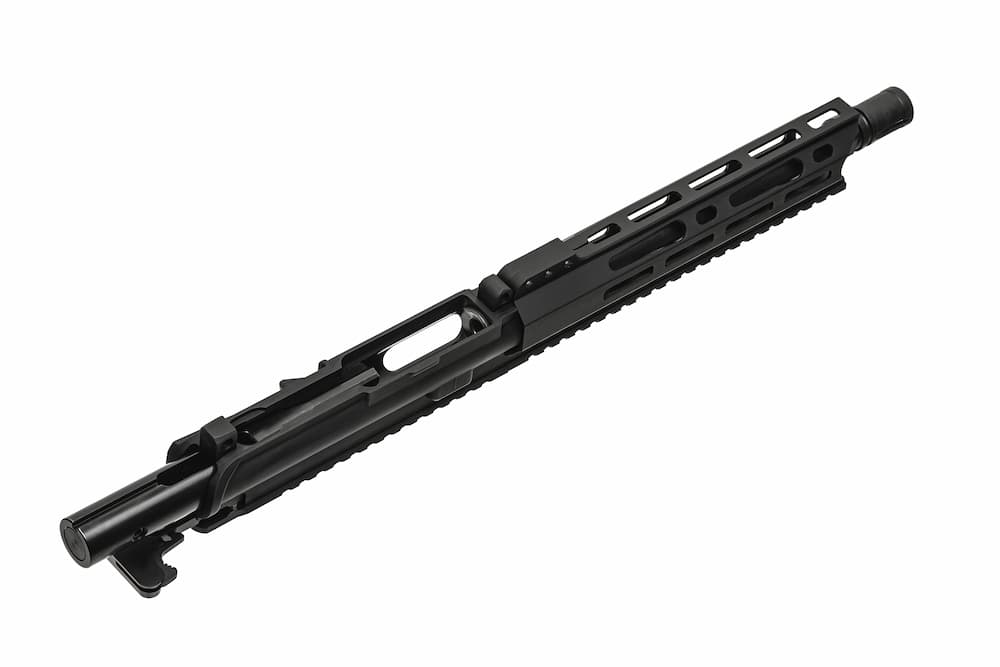
AR-15 Upper Receiver Barrel Length Options & Sizing Guide
Different AR-15s have different AR-15 barrel length options because the length significantly affects both the velocity and range of the bullet and the maneuverability or easy weight of the gun. As a general rule, longer barrel lengths give you more velocity and range, but they add more weight and can be cumbersome. Shorter barrels are easier to handle, especially in compact spaces, but you lose approximately 50 fps per inch of reduced length. At JSE Surplus, we have over 20 years of experience in selling guns and advising gun owners on which products fit their needs best. Use this quick AR upper barrel guide to determine the right barrel length for AR uppers.
How Barrel Length Affects Performance
There are many different factors that AR-15 barrel length options can affect. Whatever length you choose, there are trade-offs, so understanding the details of the differences and which performance factors matter most to you will help you make the right purchase.
- Velocity, or range. Longer barrels give the powder more time to burn. This makes the muzzle velocity higher, allowing for greater overall range and reach.
- Accuracy. Longer barrels aren’t necessarily more accurate. They have greater velocity, which keeps the bullet moving in a straight line for longer with less drop. However, shorter barrels are stiffer and have less vibration, reducing variables. Excessively long barrels can even increase friction, so even long barrels should only be as long as is required to burn the powder. Weigh considerations like iron sights and the barrel’s flex to choose your ideal length.
- Maneuverability. Longer barrels are hard to maneuver in cramped quarters, introducing delays and complications for lining up a shot. Long barrels can work well in wide open areas, while smaller spaces often demand shorter barrels.
- Recoil. Shorter barrels, such as those between 7.5″ and 10.5″, create sharp, “heavy” recoil. Longer barrels have a softer recoil, with 18″ to 20″ barrels offering the least pressure and muzzle flip. For general purposes, 16-inch barrels are popular as a middle ground between softer recoil and increased maneuverability.
Common AR-15 Barrel Lengths and Their Uses
AR-15 barrels are available in a wide range of lengths, with standard sizes falling between 7.5″ and 20″. Here’s a basic breakdown of standard AR-15 barrel length options and their applications:
- Short barrels (7.5″-11.5″): These AR barrels are short, easy to maneuver, and ideal for close quarters. They’re commonly used for home defense.
- Medium-length barrels: 14.5″ is a common length to pin and weld a muzzle device to create a legal rifle length barrel and still get the benefit of a muzzle device. 16″ is the most common for civilian use and is a well-balanced, popular option.
- Long barrels (18″-20+”): These barrels offer long-range precision, ideal for hunting and marksmanship.
Legal Considerations: SBRs and Pistols
Understanding the legal rights and requirements for AR-15s is part of responsible gun ownership. You should always verify your understanding of local and federal laws to ensure compliance with laws in your area. A common legal consideration is the “16-Inch Rule.” Barrels under 16″ long are considered short-barreled rifles (SBRs) unless they are built as a pistol, and that makes them subject to NFA regulations. If you prefer 14.5″ barrels but want to follow the 16-Inch Rule, the pin and weld method allows 14.5″ to be measured as 16″.
Matching Your Upper to Your Mission
Not sure which barrel length is right for you? Use this quick list denoting AR-15 performance by barrel length to find the right upper for different applications and answer your short vs long AR barrel debate.
- Home defense: Generally, choose an SBR or pistol configuration with a shorter rifle for easy maneuverability and handling.
- Competitions. 16″ and 18″ barrels are common in competitions because they have a softer recoil, especially with mid-length and rifle-length gas system options.
- Hunting. 20″ barrels allow for greater velocity and range, which is ideal for hunting varmints while maintaining your distance.
Shop AR-15 Uppers and Barrels at JSE Surplus
There is no one best barrel length for AR-15 uppers. Instead, consider your unique needs and preferences to select a length that makes sense. The team at JSE can help you select your best fit from our extensive selection of uppers and other components. Reach out today or explore our inventory online.
Frequently Asked Questions
How much velocity do you lose with a shorter AR-15 barrel?
When you reduce your barrel length, you lose approximately 50 fps (feet per second) of muzzle velocity per inch of reduced length. While shorter barrels are much easier to handle in tight spaces, this velocity reduction directly cuts down your maximum effective range.
Are longer AR-15 barrels inherently more accurate than shorter ones?
Not necessarily. While longer barrels provide higher velocity to keep the bullet traveling in a straight line with less drop over distance, shorter barrels are stiffer and have less vibration, which actually reduces mechanical variables.
How does upper barrel length affect an AR-15’s recoil?
Shorter barrels (7.5″ to 10.5″) create a sharp, heavy recoil and significant muzzle flip. Long barrels (18″ to 20″) offer the softest shooting experience with the least pressure, while a 16-inch barrel serves as a popular, well-balanced middle ground for general use.
What is the 16-inch rule for AR-15 upper receivers?
Federal NFA regulations state that barrels under 16″ are considered short-barreled rifles (SBRs) unless built as a dedicated pistol configuration. If you want to use a 14.5″ barrel but still comply with the 16-inch rule without NFA registration, you can use the pin and weld method to permanently attach a muzzle device so it measures a legal 16″.
Which AR-15 upper length should you choose for home defense versus hunting?
For home defense, short configurations (7.5″ to 11.5″ SBR or pistol) are ideal for tight spaces and easy maneuverability. For long-range accuracy and hunting varmints at a distance, a 20″ barrel is preferred to maximize projectile velocity and range.
Photographer: Dmitri T / Shutterstock